

Philanthropy in Place
 Caroline Underwood OBE
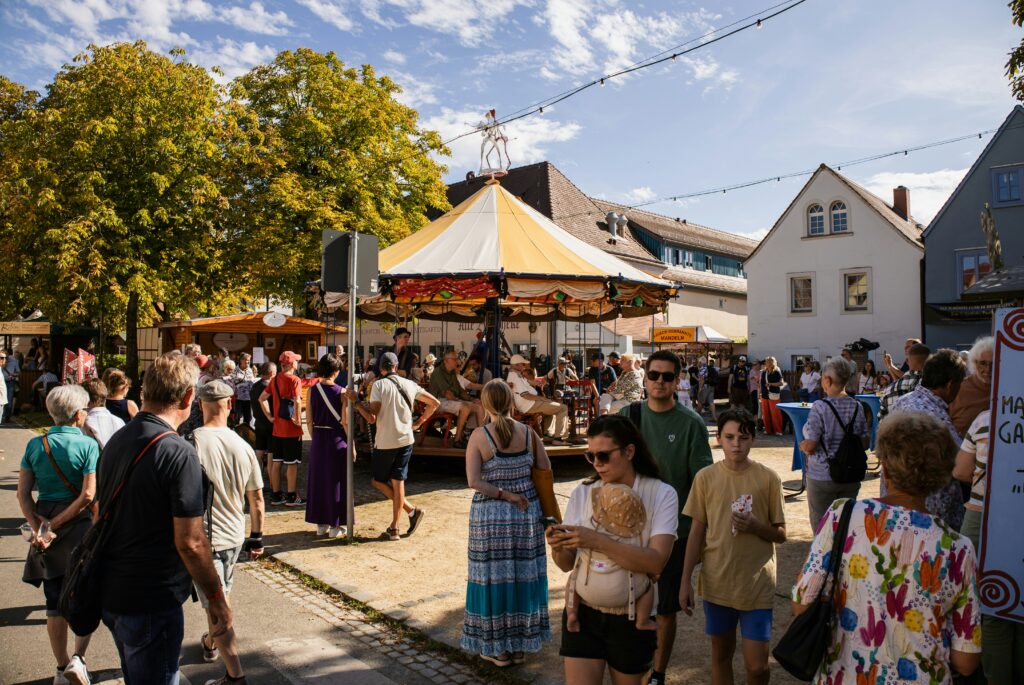
The impulse behind giving has always been deeply personal: people instinctively want to give back to the places that shaped them and many an alumni programme has benefited from this.
In recent years, this commitment to place-based giving has gained significant momentum. A growing wave of funders are moving away from traditional, broad-brush giving models to focus their capital on specific “places of change.” But what does place-based philanthropy actually look like in practice?
Simply put, it is a long-term strategy that concentrates resources, funding, and effort within a defined geographical area to achieve systemic impact. Crucially, its success relies on local leaders and grassroots organisations delivering change from within and with communities. Rather than offering short-term, transactional fixes, the most effective place-based initiatives tackle deep-seated structural challenges: regional economic inequality, housing shortages, educational gaps, and local capacity building. Like Universities these donors are here for the long-term.
For the higher education sector, this movement plays directly to our unique institutional strengths. It acts as a natural bridge, connecting universities with philanthropists, local authorities, businesses, and vital public services like the NHS to pool expertise, data, and budgets. It redefines the “Town and Gown” through civic partnerships and embeds university in place.
A university’s estate, its land, buildings, and campus, serves as its physical anchor and public face. Whilst research, academics and study within the university is happening all over the world it is the physical entity that grounds and encapsulates it. While the historical concept of “town and gown” sometimes carries a legacy of friction, modern institutions are actively breaking down these divides. Operating as vital anchor partners, universities are collaborating closely with local governments, businesses, and grassroots charities to fortify long-term regional resilience.
Universities have long been heavyweights in regional “placemaking” through public programming, educational outreach, cultural funding, and tourism. In Oxford, a city I know well, the opening of the Stephen A. Schwarzman Centre for the Humanities, alongside iconic institutions like the Ashmolean and Pitt Rivers museums, creates a vibrant cultural arena open to the entire community, not just members of the University. Mobilising global alumni networks to invest back into the place of their studies remains a foundational pillar of institutional advancement.
Case Studies: Place-Based Action in Higher Education
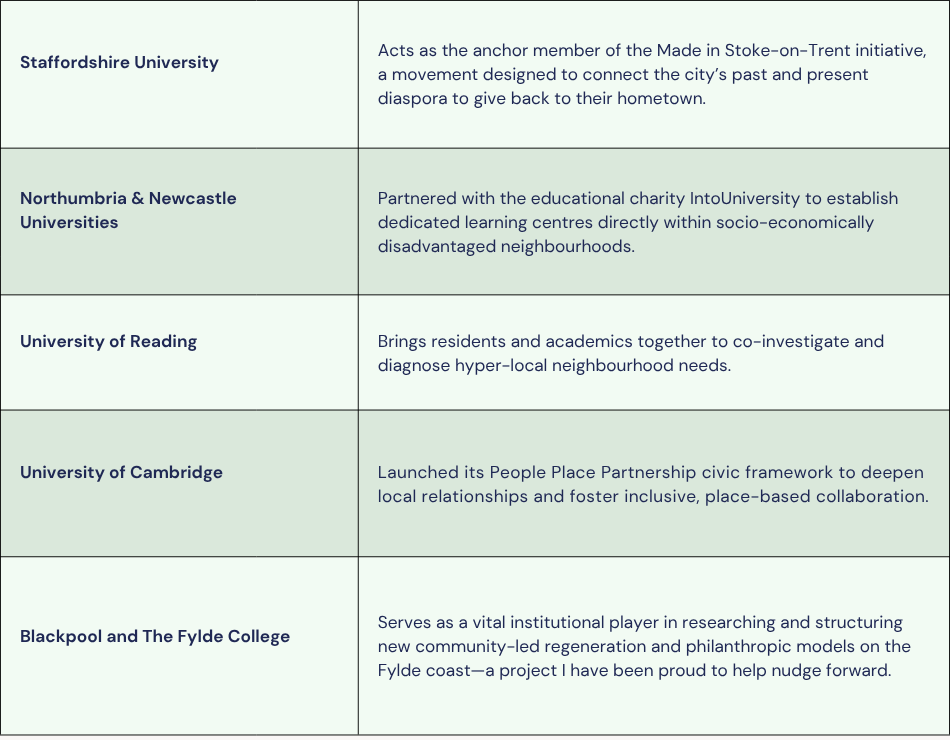
A new generation of projects demonstrates how universities and colleges are driving regional regeneration as central anchor partners across the UK:
The Power of Catalytic Philanthropy
When local philanthropists align directly with these communities, the results are transformative. Consider the Cradle to Career collective impact scheme in North Birkenhead, a Merseyside neighbourhood facing some of the highest child poverty rates in the UK.
By bringing together youth workers, teachers, council staff, and residents, the programme has boosted local literacy rates by two-thirds and halved the number of families requiring intensive social services support. The catalyst was flexible, patient funding from the Steve Morgan Foundation, led by a philanthropist born and bred in Merseyside who wanted to invest back into his roots. That kind of flexible backing gives a community the breathing room to solve problems creatively.
The UPP Foundation actively champions this work, showcasing how targeted investments expand public sector capacity. Similar visionary projects are emerging nationwide:
- In Grimsby, tech entrepreneur Jason Stockwood is leveraging the local football club to rebuild community pride and purpose.
- In Bishop Auckland, Jonathan and Jane Ruffer have donated an estimated £120 million to revitalize the region through culture and heritage.
- In Folkestone, businessman Roger de Haan transformed nearly 90 derelict seafront buildings into a thriving Creative Quarter.
- In Lincoln, the University of Lincoln opened the Lincolnshire Institute of Dental and Oral Health (LIDOH) in March 2026. Backed by £1.5 million from the UK Shared Prosperity Fund, it directly addresses the region’s “dental desert.” The university is now expanding this via its “Strong Roots” programme into a hub-and-spoke Dental Clinic and Training Centre.
A Strategic Framework: Government Endorsement
The momentum behind this movement achieved a Government led boost in April 2026, when the DCMS launched Our Place to Give. I have been part of a group sharing knowledge and supporting DCMS in developing this initiative. While initial funding of £1 million over three years is modest, it represents a landmark step: the first time the UK government has deployed a clear, strategic framework to scale place-based philanthropy.
Developed in collaboration with sector experts to stimulate new donor pools, the scheme is built on three core pillars:
- Mapping the Landscape: Securely connecting philanthropy with specific geographical needs.
- Strategic Partnerships: Embedding higher engagement between donors and national or local government.
- Unlocking Investment: Collaborating with the Office for the Impact Economy to provide match-funding and scale local giving.
The (local) Road Ahead for Our Sector
The DCMS initiative is a powerful validation of what forward-thinking universities have long understood. Whether through formal Civic University Agreements, capacity-building support for grassroots charities, or acting as the analytical engines that prove the impact of regional regeneration, universities are no longer just in their communities, they are of them.
By bridging the gap between global alumni networks, local wealth, and community needs, higher education institutions are evolving to be the ultimate anchors for lasting regional change.
• Hawksbee, A. (2024). Role of university philanthropy to support places. The Kerslake Collection, UPP Foundation. UPP Foundation
• Department for Culture, Media and Sport (2026). Our place to give: a plan for growing place based philanthropy. Published 13 April 2026. GOV.UK
• Universities Policy Engagement Network (UPEN). Place programme.
Our work

Modernising donor recognition across the National Trust for Scotland
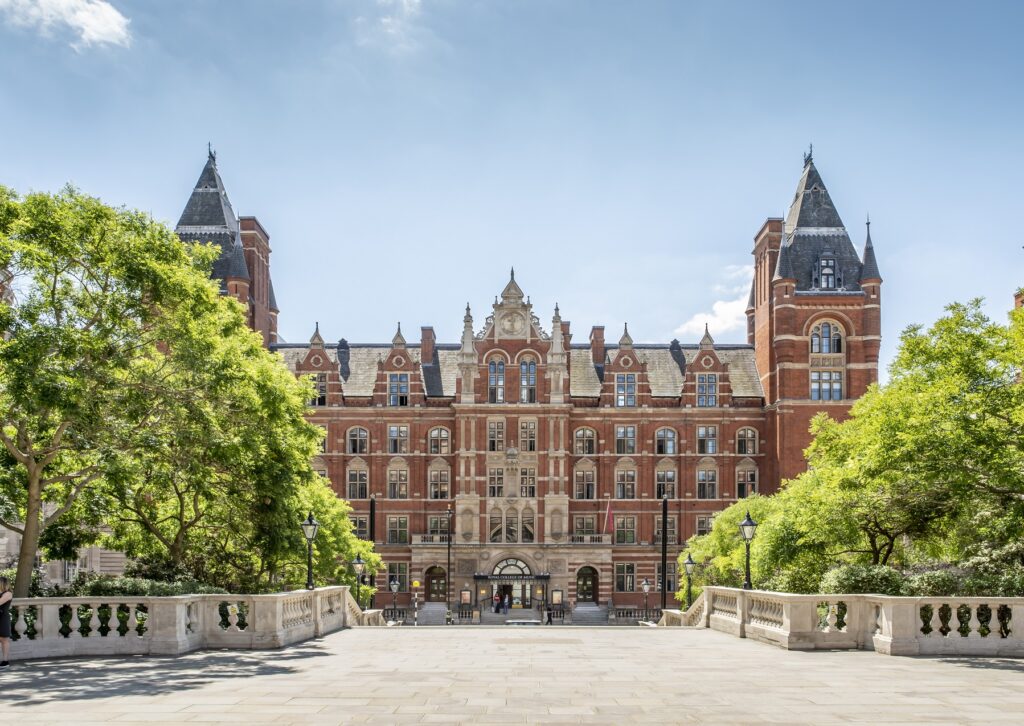
Royal College of Music: Endowment Readiness Review
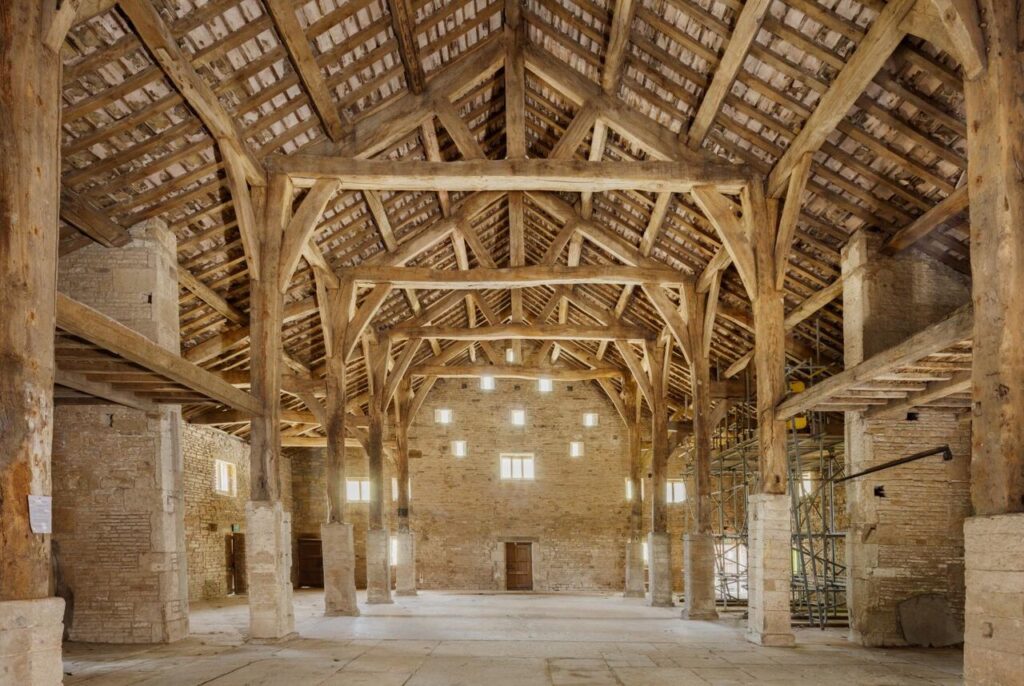
Building a strategic approach to corporate partnerships for Historic England
Building a sustainable fundraising future with REAch2 Academy Trust
What we do


Fundraising strategy
Active fundraising support
Training and development